Contactless payments for bikeshare
Contactless payments can remove major barriers to bikeshare use by eliminating the need for app downloads or account creation. Rebel’s market sounding for the Dutch Ministry of Infrastructure and Water Management explores user benefits, implementation challenges, and policy actions needed to accelerate seamless, accessible, and scalable bikeshare systems across the Netherlands.
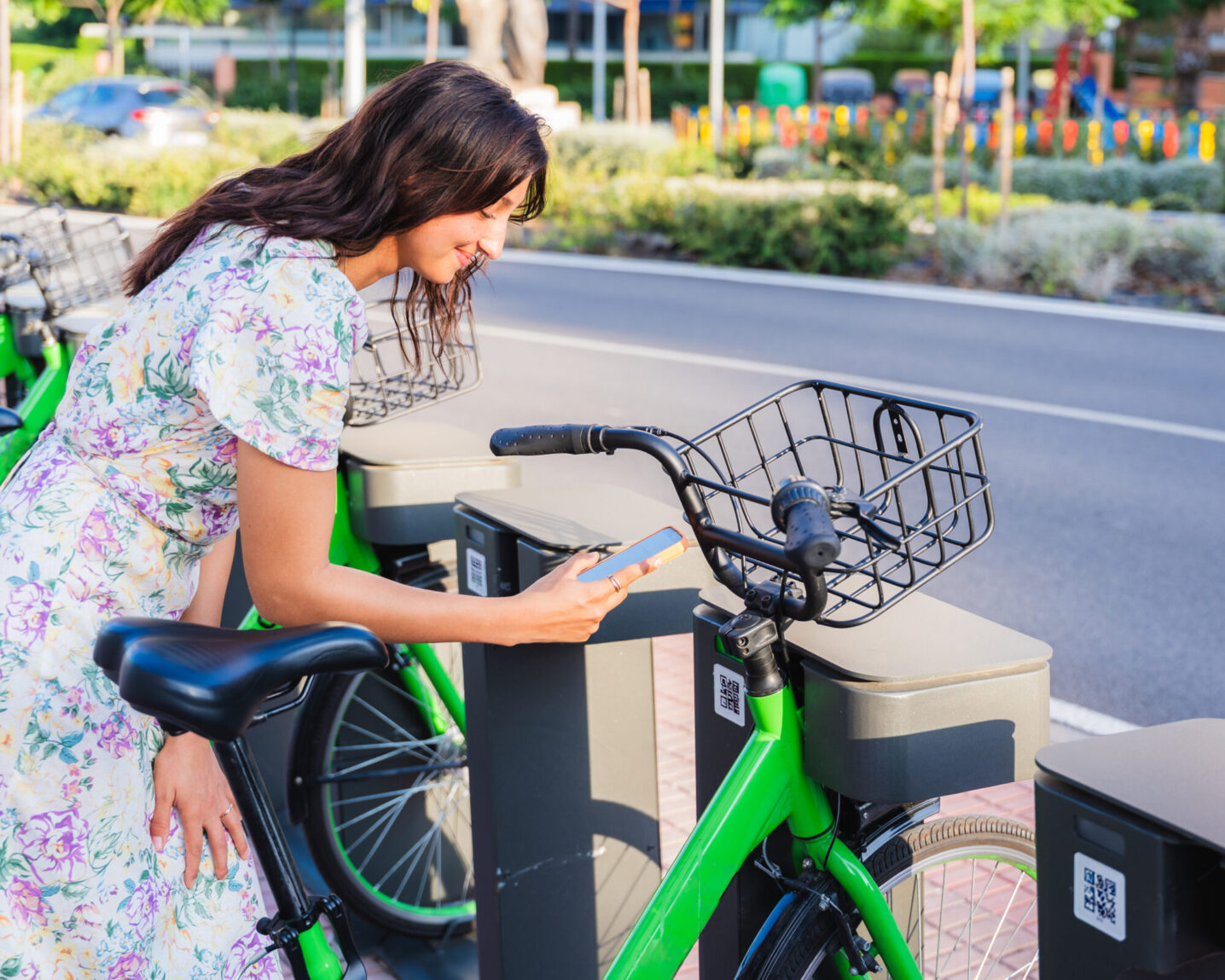
The challenge
Bikeshare systems in the Netherlands (and abroad) face a persistent challenge: despite their potential to improve sustainable mobility, many operators struggle to attract sufficient ridership, especially outside major urban areas. Lengthy onboarding processes, such as downloading an app, creating an account, and adding payment details, create significant friction and deter occasional users, tourists, and international visitors. At the same time, governments increasingly view bikeshare as an essential complement to public transit, particularly in regions with limited accessibility. To unlock bikeshare’s full potential, barriers to easy access must be removed. This has prompted an exploration of contactless payments as a key innovation to simplify use and boost adoption.
The approach
To understand whether contactless payments could meaningfully improve access to bikeshare and advance Dutch mobility goals, Rebel conducted a structured market sounding on behalf of the Ministry of Infrastructure and Water Management. Our approach combined stakeholder engagement, ecosystem analysis, and hypothesis-driven research to build a clear picture of both the opportunities and barriers surrounding this innovation.
We began by defining five key hypotheses on the potential impact of contactless payments on bikeshare. These hypotheses covered expected ridership growth, the effect on user account creation, the strength of the business case for operators, the competitiveness of the supply market, and the role of government as an accelerator. They formed the backbone of our research and structured all discussions and analysis.
Rebel engaged a diverse set of stakeholders representing the full bikeshare ecosystem: municipalities, commercial and public bikeshare operators, and payment industry players. To ensure candour and protect commercially sensitive information, all conversations were conducted under Chatham House rules. This allowed respondents to speak openly about their concerns, expectations, and experiences—an essential condition for uncovering realistic barriers and practical solutions.
Each interview explored how contactless payments could address current user friction, the technical, financial, or operational challenges operators foresee, and how public authorities view their role in stimulating innovation. We specifically examined the user journey for contactless payments, the technical requirements for integrating EMV terminals on bikes or racks, and the implications for operators’ business models in urban, suburban, and rural contexts.
In parallel with these discussions, we analyzed existing examples and emerging pilots in Europe and beyond, including implementations in public transit and early bikeshare initiatives. This contextual perspective allowed us to compare Dutch challenges with international trends and assess whether contactless payments could realistically scale.
Based on this combined input, we evaluated each hypothesis and distilled cross-cutting themes. These included a strong user need for frictionless access, the technical feasibility of payment integration, uncertainty in the operator business case due to cost and theft-related risks, and the absence of major technological barriers on the supply side. We also observed that government policy, particularly around multimodal mobility, procurement processes, and regional alignment, plays a crucial role in whether contactless bikeshare can achieve scale.
Finally, we synthesized these findings into a set of actionable recommendations focused on mitigating app dependency, improving bike discovery, aligning incentives through mobility wallets, and addressing the investment challenges faced by operators. The culmination of our approach was a proposed demonstration project, designed to test solutions holistically and generate the evidence needed to support national decision-making on future bikeshare innovation.
Impact
Removing friction to increase bikeshare ridership across all regions.
The experience of a Rebel